September 21st
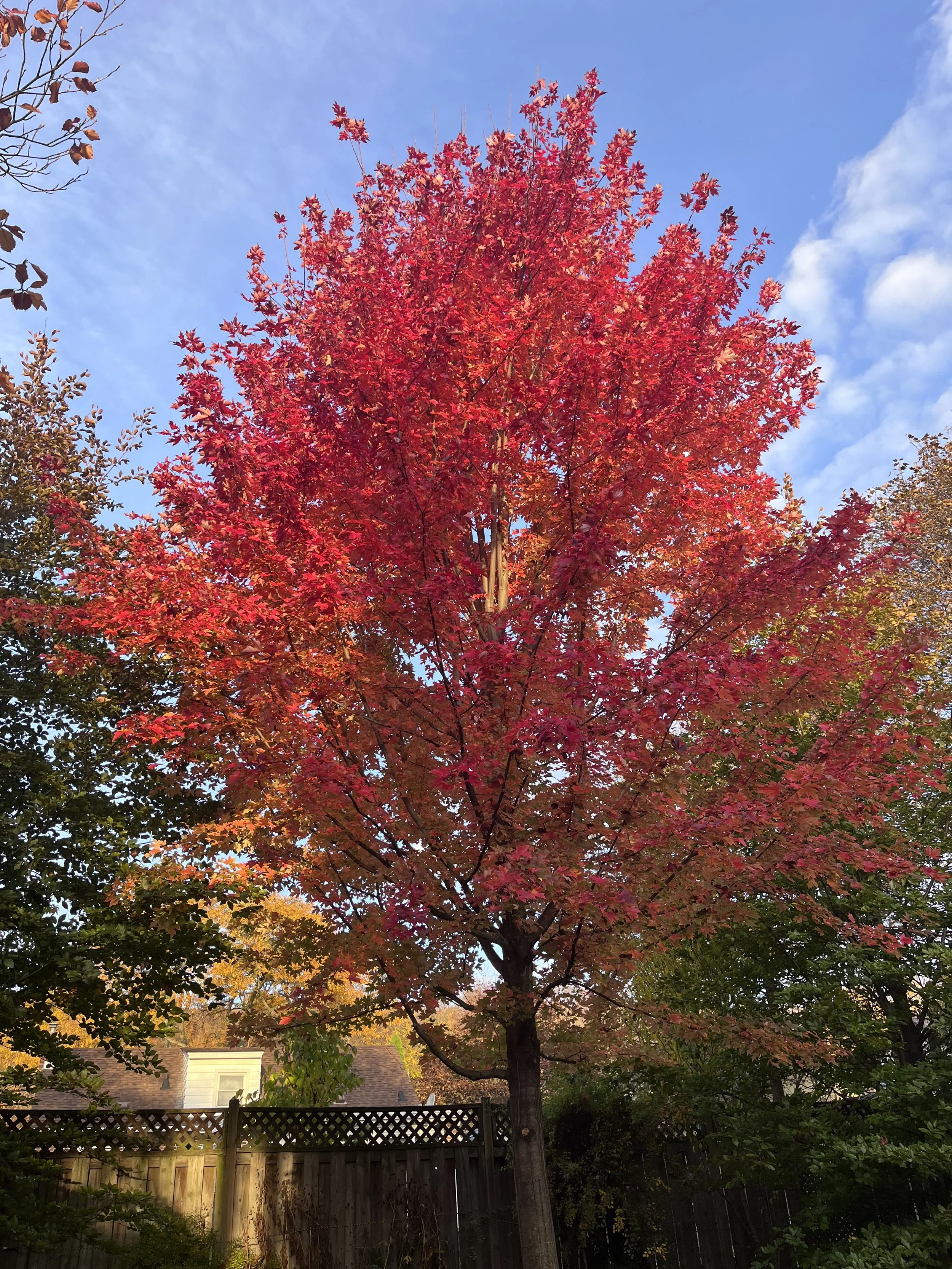
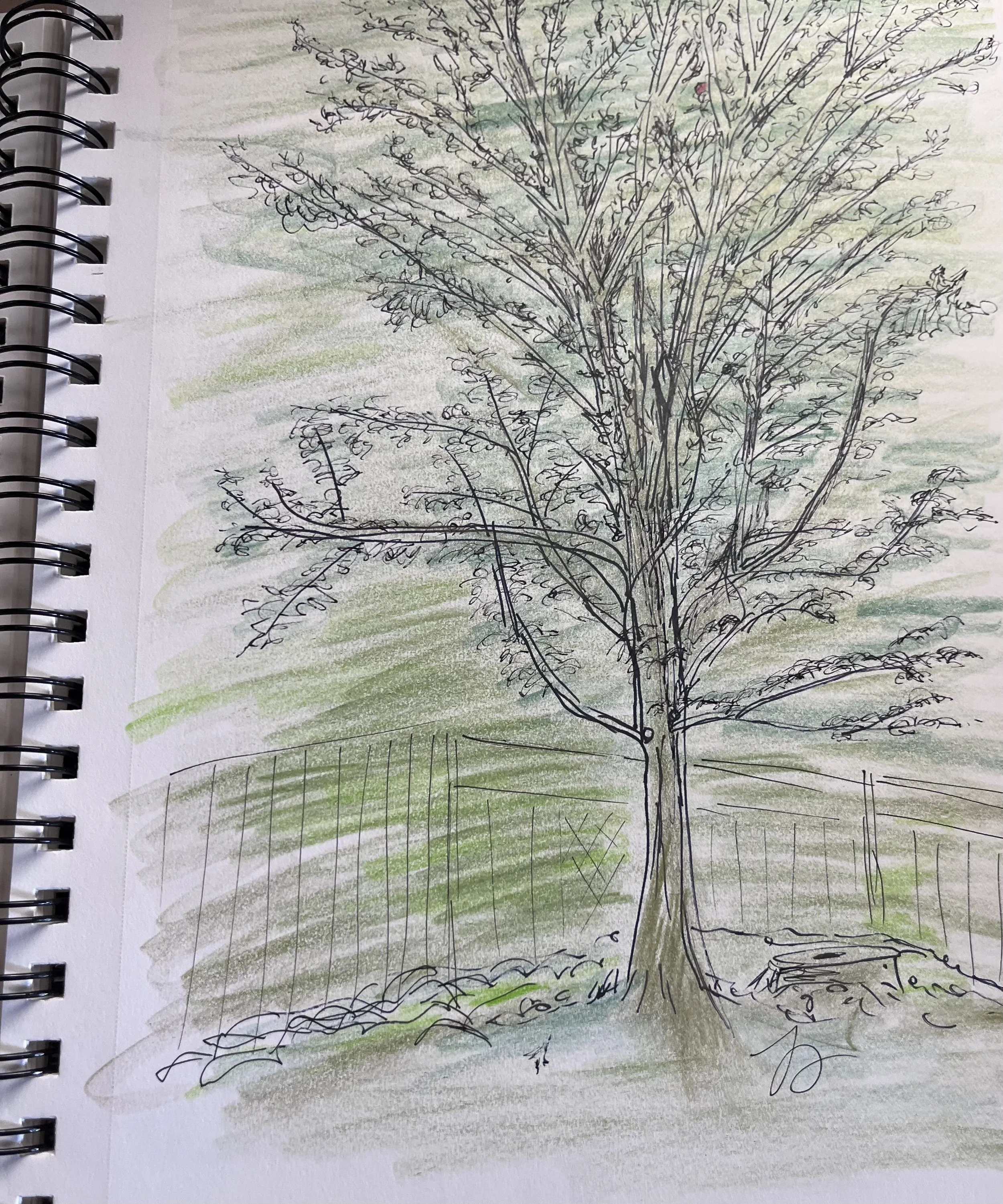
Thought it’s officially the first day of fall, the leaves on the autumn blaze remain green. There are no black spots on her leaves like the ones that have beleaguered the Norway Maples all along the escarpment. It’s cold–10 degrees–as I sit down to draw under the tall leaves of our neighbour’s bamboo stalks. The invasive plant grows under the fence and pops up all over our lawn. Every year I hack away at it and my neighbour gives me tomatoes by way of apology for his experimental planting gone awry.
I find it hard not to stay longer to draw the beech tree, and the tall meadow rue that blow against the fence.
The maple shoots upward, with a never-ending series of wish-bone departures, bending towards the light.
This is a tree with many young forks, a repeating pattern of “V”’s, of new growth. There are a few branches of substantial width. I wonder when the splitting will stop and the thickening begin?
It makes me think of the Church.
When will the splitting stop and the thickening begin?
Up Close & Personal
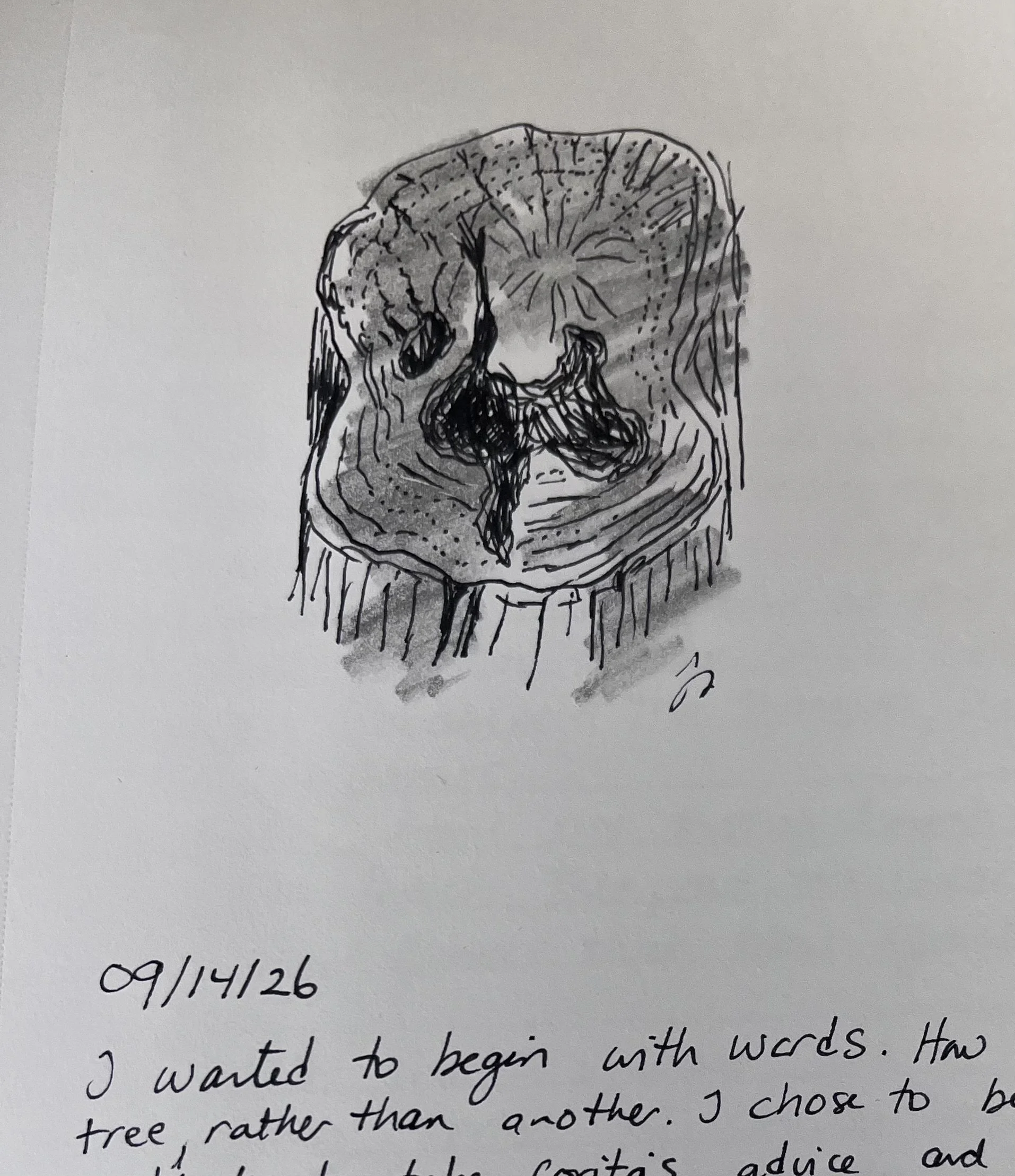
Today I sat close to the maple to draw her bark. During COVID I did this with the birch street on the front lawn (now sadly replaced by the solitary gingko). The exercise was calming at a time when uncertainty abounded.
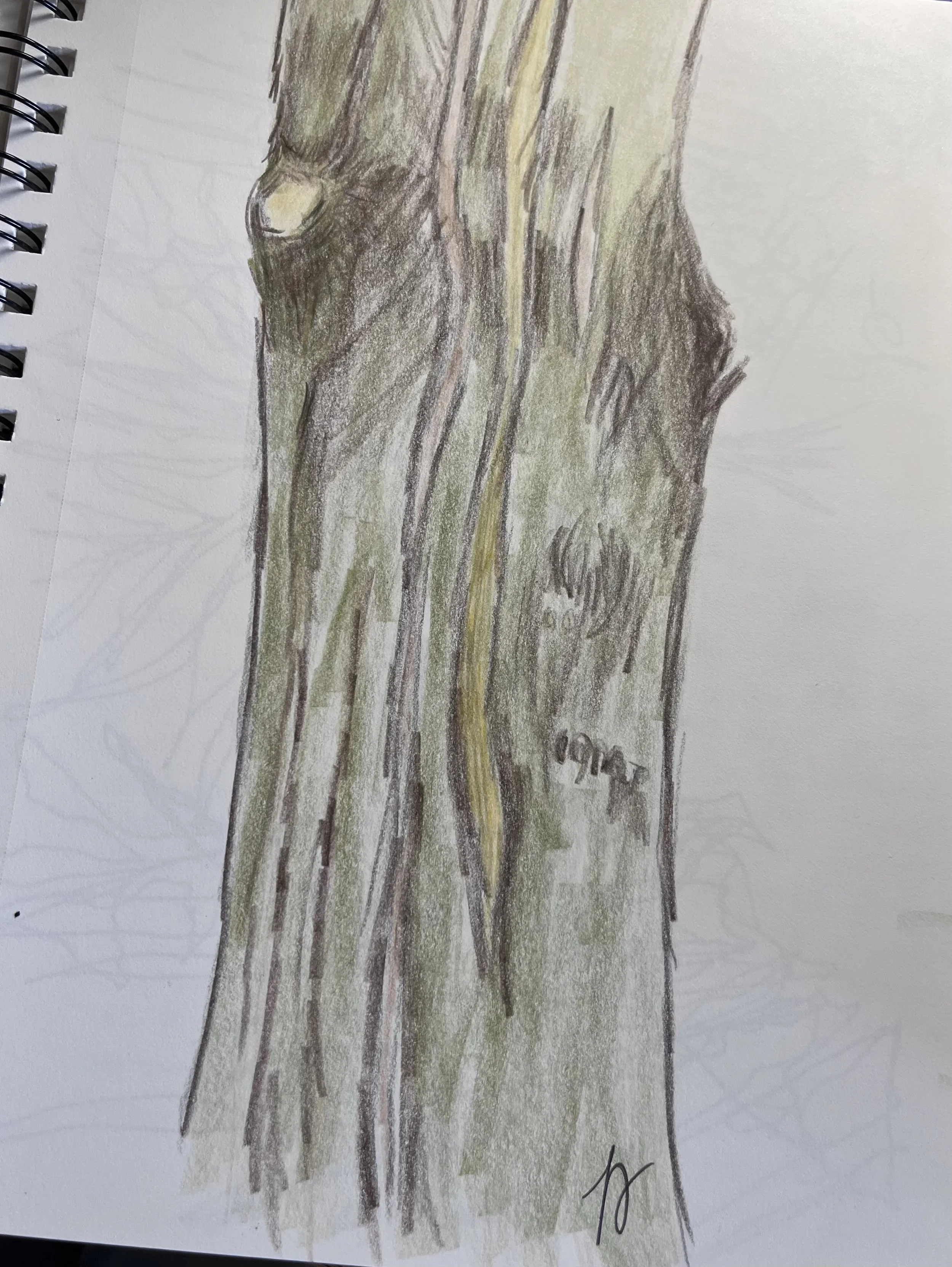
Both the birch tree and the maple were hosts to many insects that bored into their bark and tried to make a home in tiny portals. I worried for the Maple when she was newly planted and large, black ants found their way into a vulnerable spot to make a giant nest. I concocted a potion to deter them and physically bandaged the opening. It “worked”, though the wound looks scarred and craggy- the tree looks older than I think it should, though I have no benchmark for bark conditions. I feel invested in the health of the trees because they have grown into a private, green oasis in nineteen years, and someday someone else will need to scan their bark and leaves for disease or infestation. Someone else will need to cherish them as I cherish them.
What if someone bought the house and cut down one of the beeches to make room for a shed? This completely sensible endeavour (this home has no garage) feels offensive to me. Irrationally, I fantasize about how to prevent such a thing. One doesn’t change oneself to an urban backyard beech tree. This isn’t the rainforest. And yet, I don’t like the idea.
October
The backyard gets shadier each week. As I position my chair with my back to the only remaining sliver of sunshine, I contemplate the three fences (all different) around my little forest. “The boundary lines have fallen for me in pleasant places”.
I consider this verse while trying to keep my pen on the page. The ink is grounding me in gratitude to my neighbours, and our shared history.
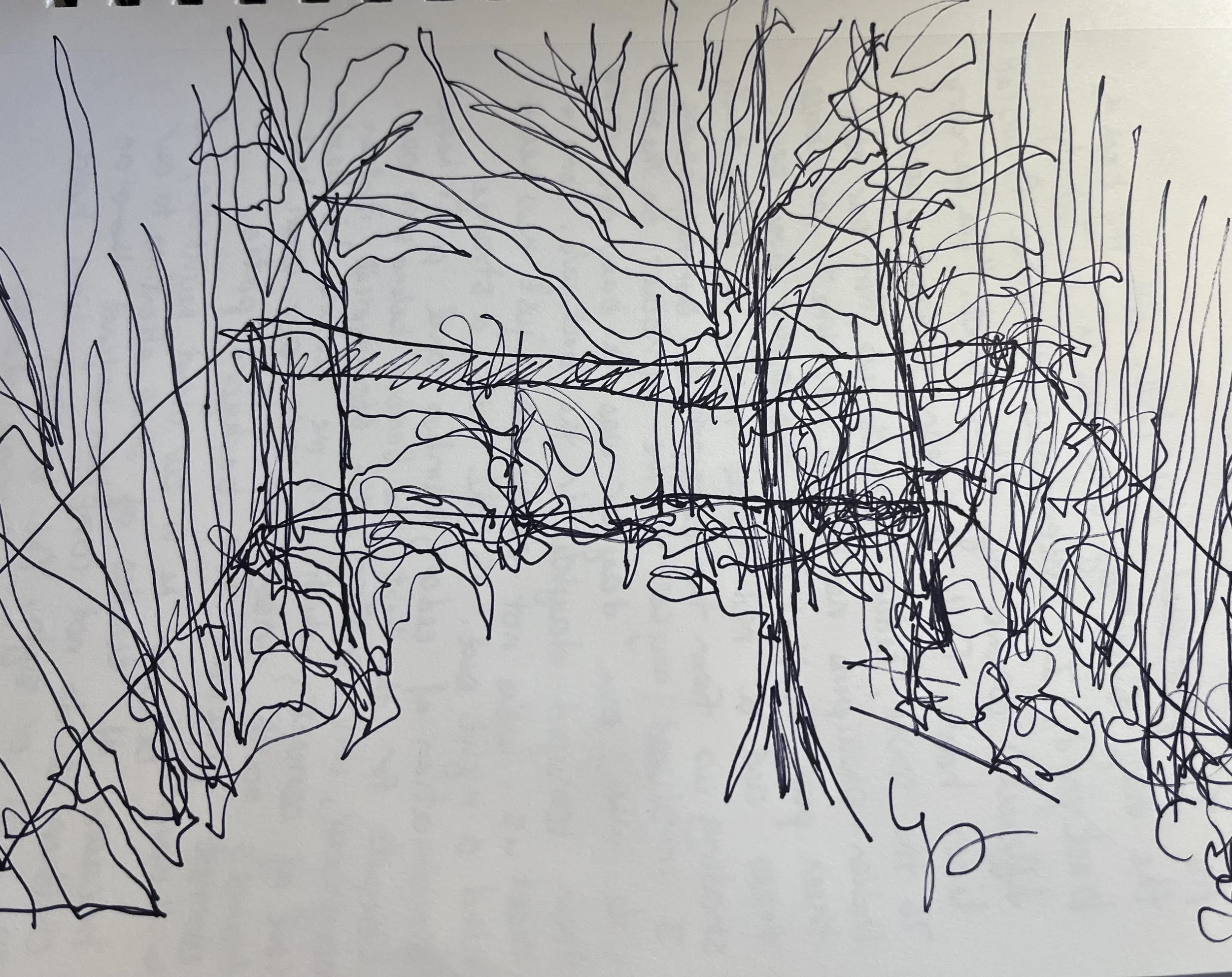
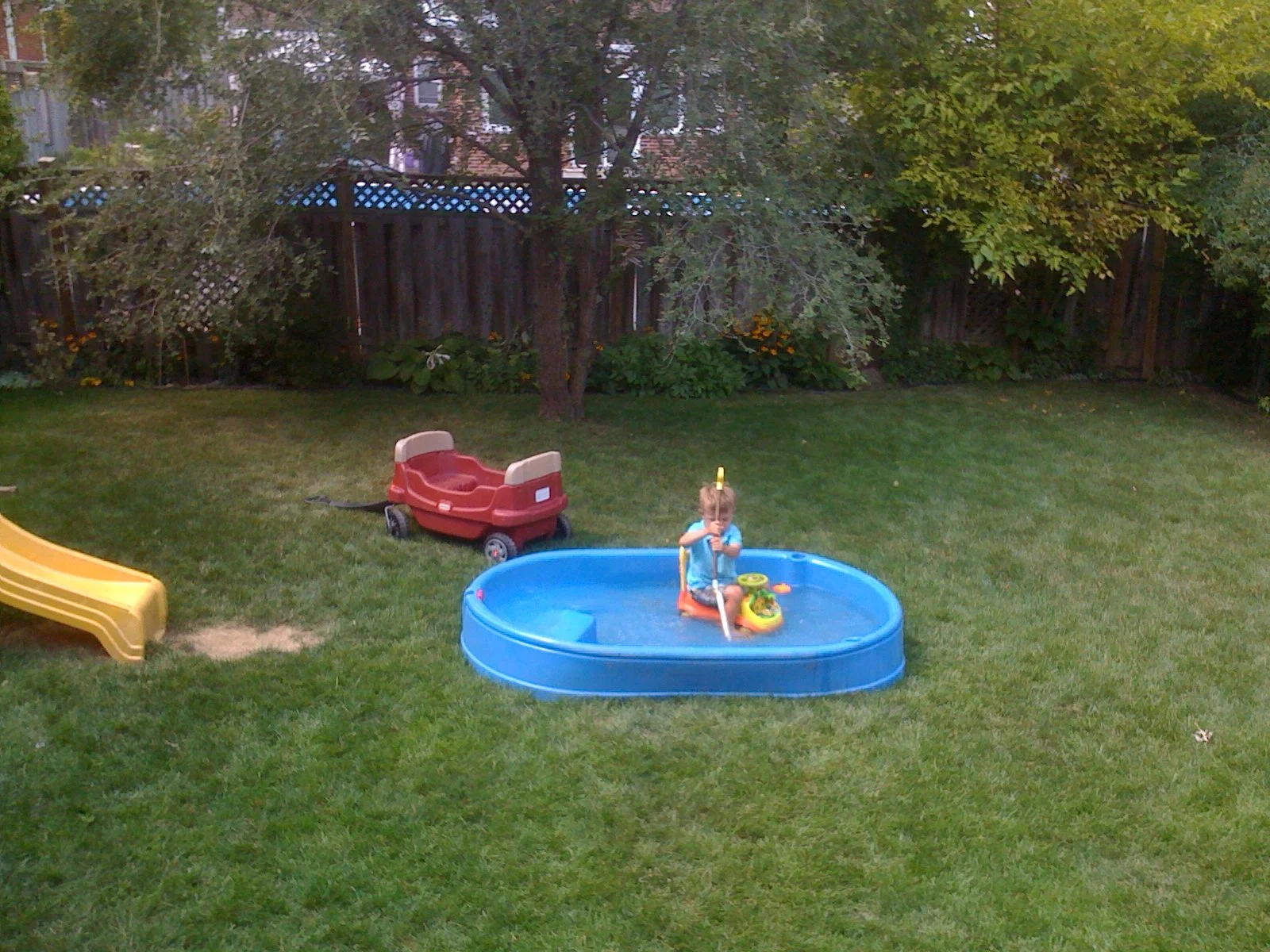
To the south, old cedars separate us from our new Indian-Filipino neighbours who enjoy raucous cannonball jumps in their pool. I love their laughter. The previous neighbours fought bitterly, and then won the lottery and moved out of the neighbourhood. I haven’t seen them since. To the west, the two river beeches and a red maple make a wall shading us from the escarpment. Before we planted this trio, in the early days of living here, we once spied a teenager on the other side of the fence we hoped could maybe give us a break from our young children. We circled the block and introduced ourselves to her parents (we’re not crazy, we’re just new in town!) and regained date nights. Though the trees prevent us from spying on the neighbours, now we hear our now grown babysitter’s niece shrieking as she barrels down the slide on their side of the fence. It would take effort to spy on us through the leaves, but we would be up for child-minding, should neighbourhood parents need some relief. It only takes the blink of an eye to go from wanting a break, to wanting to hear a child’s voice tell you an un-ending story about Minecraft or Pokemon.
Finally, the boundary lines to the north – a strange combination of privet hedge, sun-deprived raspberry, bamboo and cedar compete for the light. These neighbours were the first to welcome us; they started fresh with a new build beside our older home, and while we planted trees, they poured concrete over every available surface. While this affection for cement has at times created a headache for drainage, we have improvised without complaining because of the small attentions given to our children over the years. What’s another forty feet of weeping tile if the kids get easter baskets? It’s absurd, neighbouring.
It’s absurd, because roots are absurd. You put them down, and you don’t know exactly how they will grow.
After a month of contemplating a native tree in my backyard, something shifted in me. The cottage around the corner, with its pine tree perimeter and its beautiful front porch still beckons, but for now it will be someone else’s home. The author of Ecclesiastes writes about the fabled “time for everything under heaven”, about the time to plant and to uproot. It was clear when to cut down the elm and the birch, it has been less clear when to uproot ourselves.
The wise Ruth Haley Barton, in her book “Pursuing God’s Will Together”, suggests practices for noticing feeling of desolation and consolation. She writes that one must reach a place of indifference when it comes to discerning which way to go.
As I spent time contemplating the maple tree in my back yard, watching its leaves grow from brilliant green to blazing red, I felt desolation at the thought of leaving it behind. Moving to the house around the corner might have made sense on paper, but it wasn’t making sense in my heart. I loved the pine trees in theory, and while I was confident I’d grow to love them, I loved my maple from experience. I knew it intimately. I had saved it from the ants. (Maybe.)
The kids think their parents are having a crisis of sorts, flip-flopping on their plans and waffling in indecision. Someday they will hopefully also make some dubious financial decision because of a tree, and when they come home to tell us about it, they’ll know just where to find us.